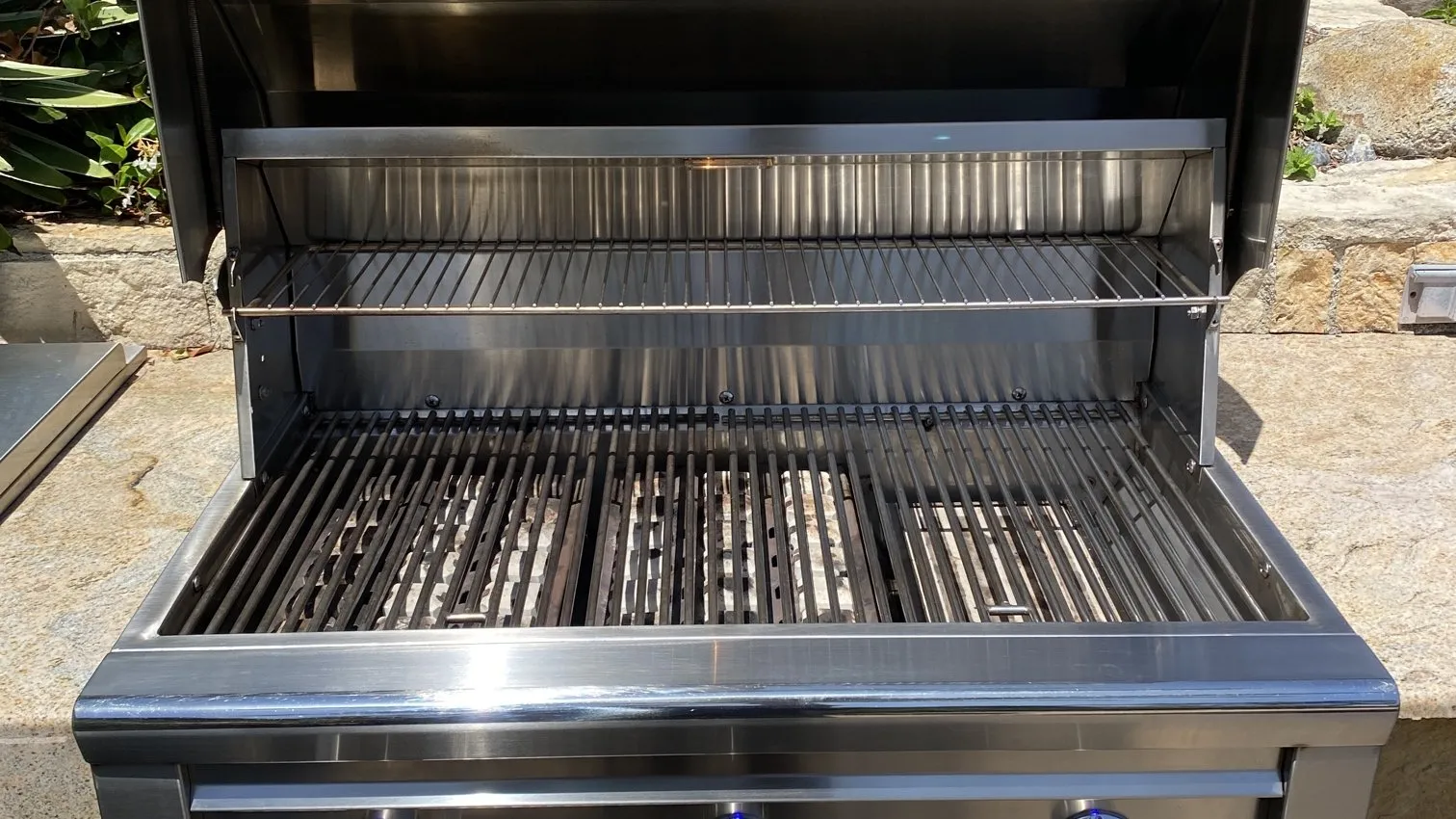
Short answer: Grill restoration means cleaning off the surface rust and replacing the parts rust has eaten through. Rust on the grates, the hood and the firebox walls usually comes off. A burner, a heat plate, a valve or a firebox floor with a hole rusted through is replaced, because cleaning cannot put the metal back.
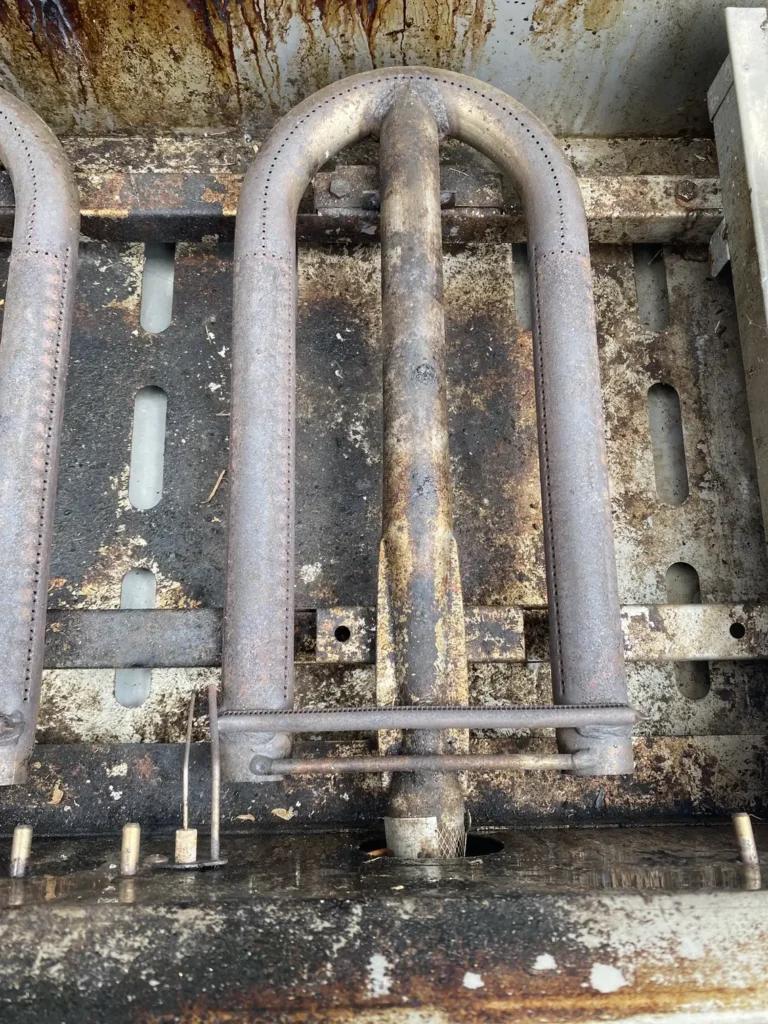
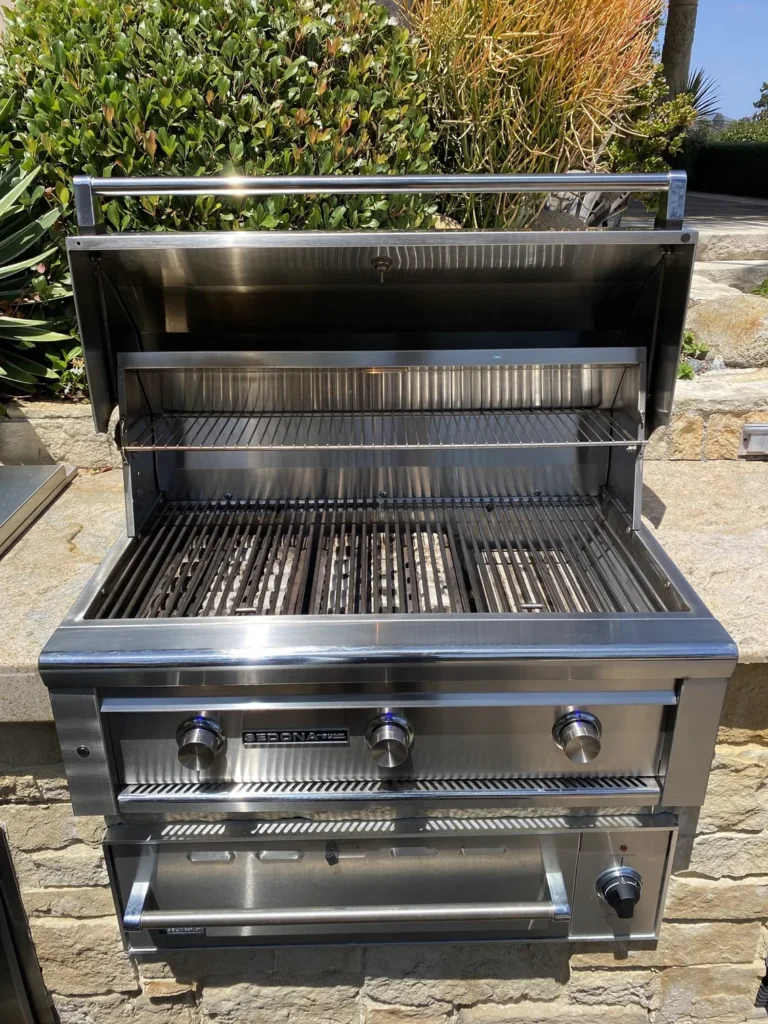
Rust tells you which parts are gone and which are fine. On most grills we restore, the body is sound and it is the parts that have given out.
What rust can be saved, and what cannot
| Part | Surface rust: clean it | Rusted through: replace it |
|---|---|---|
| Cooking grates | Scrub, wash, dry and oil them; most come back | Flaking or broken bars: new grates |
| Heat plates, flame tamers, briquette trays | Light rust brushes off | Holes, warping or crumbling edges: new plates or trays |
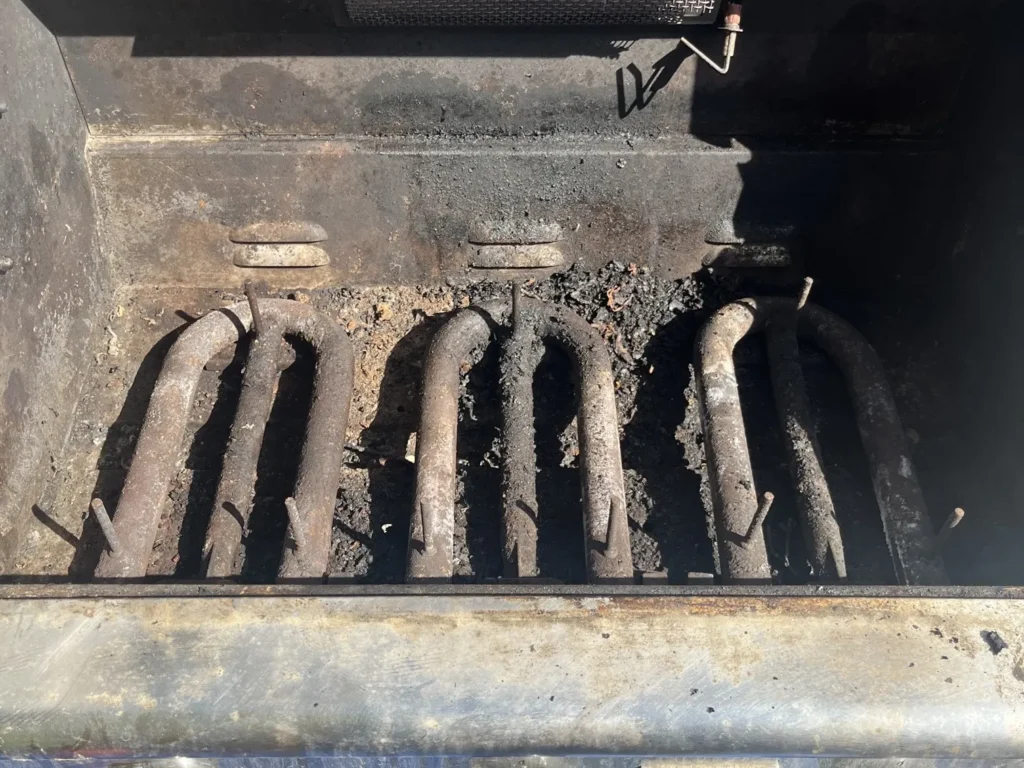
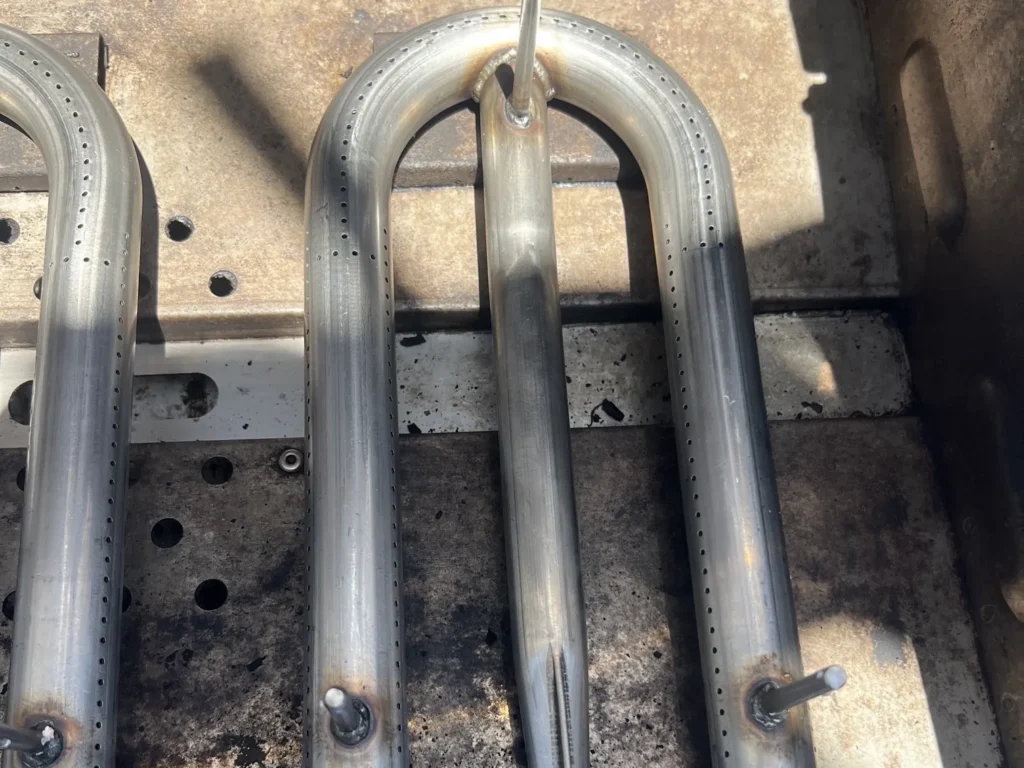
| Burners | Rust on the outside cleans up; clogged ports can be drilled out | Rotted through or split along the ports: new burners |
| Igniter electrodes and collector boxes | Light rust cleans off | Crusted or rusted boxes, or an electrode that no longer sparks: replace them |
| Valves and knobs | Stiff valves can be freed up and lubricated | A rusted valve stem or a valve that will not turn: new valve and knob |
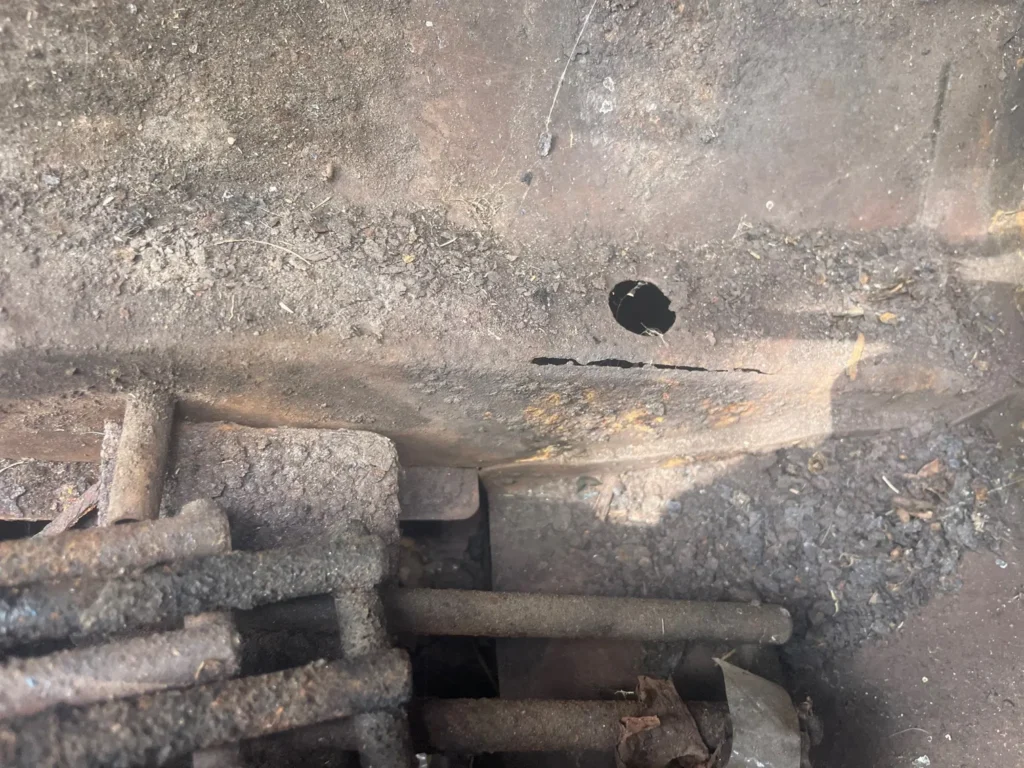
| Firebox | Rust stains on the walls and floor come off | A hole through the floor or a wall: a bigger repair, and the point to price a new grill too |
| Hood, cart and body | Surface rust can be sanded and touched up with high-heat paint | Rust through a panel or a cart frame: replacement panel or a new grill |
If you are not sure which side of the table a part is on, send us a photo of the whole grill and the worst of the rust. We will tell you what it most likely needs, free.
How to restore a rusty grill yourself
Surface rust is a job you can do at home with a free afternoon. You need a grill brush or steel wool for the grates, a scrubbing pad, a degreaser or warm soapy water, baking soda, white vinegar, medium and fine sandpaper, gloves, cooking oil and, if paint is chipped, high-heat grill paint.
- Look first. Turn the gas off at the tank or the supply. Take out the grates, heat plates and burners and look at each one. Anything rusted through goes on a list to replace; the rest you can clean.
- Degrease. Rust is easier to see and reach once the grease is off. Wash every removable part in warm soapy water or a grill degreaser, and scrape the firebox. For heavy grime, sprinkle baking soda on and scrub.
- Take the rust off the grates. Scrub with a grill brush or steel wool. For stubborn spots, coat them with a paste of baking soda and white vinegar, leave it a few minutes, then scrub again. Rinse.
- Clean the burners gently. Brush the outside lightly and clear each port with a straight pin or a small drill bit by hand. Do not enlarge the ports. A burner with a hole rusted through, or one that splits along its ports, needs replacing.
- Sand the hood and body. On painted parts, start with medium sandpaper to take the rust off, then fine to smooth it, and wipe the dust away.
- Dry everything completely. Water left in a firebox or on the grates starts the rust again. Towel it dry, then put the grill back together and run it for a few minutes to drive off the last of the moisture.
- Touch up the paint. On a painted hood or cart, a few thin coats of high-heat grill paint over clean, dry metal cover the sanded spots.
- Season the grates. Heat the grill to medium-high, then wipe the grates with a paper towel dipped in cooking oil, held in tongs. Let the oil cook on. Do it again every few months.
Light the grill and watch the flame. Blue and even along each burner means it is ready. Yellow, lazy or patchy means a burner or its port still needs attention.
What a technician does differently
A home clean reaches the rust you can see. A restoration goes further: it is a full cleaning and a rebuild in one.
We take the grill down to its components and clean every part, inside the firebox as well as out, with a commercial kitchen degreaser made for us, used only by our trained technicians. Everything worn is then refurbished or replaced: burners, heat plates, grates, briquette trays, igniters, valves and knobs. Burners are the part we replace most often on a rusty grill.
Parts are often the hard part on an older grill. We source from more than 100 parts vendors, including parts for models the maker stopped supporting, and our technicians fit every part they bring. A restoration takes 5 to 6 hours on site; some need a second visit, scheduled around you. You get an estimate first, with every option priced: see what a full restoration includes.
When grill restoration costs less than a new grill
Usually, when the rust is in the parts. When the damage is in the burners, heat plates and igniters, a restoration usually comes in at a fraction of a comparable new grill.
It stops making sense when the firebox has rusted through, or when the parts the grill needs cost close to a new one. In that case we say so, and you get a price for both. Not sure yet? Read whether an old grill is worth fixing, or send us a photo and we will tell you what yours most likely needs.
Keeping rust off a coastal grill
Salt air near the coast speeds up rust, and a grill in San Diego County gets used all year. A few habits help:
- Dry it before you cover it. Run the grill for a few minutes after cooking or cleaning so the firebox and grates are dry, then let it cool before the cover goes on. A cover over a wet grill holds the moisture in.
- Close the hood when it is not in use. It keeps the grates and burners out of the damp.
- Keep the grease tray and the firebox clean. Grease and food left inside hold moisture against the metal.
- Oil the grates now and then. A light coat of cooking oil after a clean, as in step 8.
- Look under the hood once a season. Check the heat plates and burners for rust while it is still on the surface.
For the names of the parts above, see what each part is called. When it is time for more than a home clean, a professional cleaning takes the grill apart and checks every part.
Questions about rusty grills
Can a rusted-through burner be repaired? No. Once rust has made a hole in a burner or split it along its ports, the burner is replaced. Clogged ports on a sound burner can be drilled out, and that is part of every cleaning we do.
How long does a grill restoration take? About 5 to 6 hours on site. Some restorations need a second visit, scheduled around you.
Can you get parts for an old or discontinued grill? Usually, yes. We source from more than 100 parts vendors, including parts for models the maker no longer supports, and our technicians fit every part they bring. A photo of the rating plate helps us find the right one.
Should I restore my grill or buy a new one? If the firebox is sound and the rust is in the burners, heat plates and igniters, a restoration usually costs a fraction of a comparable new grill. If the firebox has rusted through, we price both and tell you which makes sense.
Send a photo for a price
Send a photo of the whole grill and the worst of the rust, and we will tell you what it most likely needs, free. We work across San Diego County and from Temecula up to Hemet.